quarta-feira, 31 de março de 2021

wounded comrades

Madeline Beach Carey, no The Commom Breath, sobre o Sevastopol.

.
I first came across Emilio Fraia what seems like a lifetime ago. It was December 2019, just a few months before time slowed and then stopped for so many of us. I was on my lunch break, eating in a crowded vegetarian self-service cafeteria in the centre of Barcelona. A man from Nepal asked if he could share my table. I nodded, we chatted, and then I got back to reading a short story titled ‘Sevastopol’ in The New Yorker

The story is set in São Paolo and explores a friendship between Klaus, an older playwright who has seen better days, and Nadia, the narrator, a young woman who wants, maybe, to be a writer. Both of these people are lonely, seemingly lost and guided only by the will to imagine—the ephemeral hope of stories. I found the story charming, but later forgot about it. I didn’t search for Emilio Fraia’s biography online. I read his story during lunch and quite liked it. Back then, that was that. I had people to meet, places to go, menial meaningless tasks to perform in a crowded office. 

Close to a year later, Lolli Editions announced that it was publishing a slim volume, a novel in three parts, by a Brazilian writer. Blurbs promised ‘a literary jewel;’ ‘accurate language, powerful imagination.’ The press release went even further, claiming Fraia’s prose was ‘reminiscent of the prose of Anton Chekhov, Roberto Bolaño, and Rachel Cusk.’ 

And while it may sound as if some people were using a bit of hyperbole, let me say that I, scout’s honour, am not. This book lives up to the hype. Fraia’s prose is magnificent and magical. Sevastopol is a gentle marvel. Zoë Perry’s English translation is sparse and, deceptively simple. There is a stillness to the prose but something is going on just beneath the silky surface. The words and the character’s memories of memory become interwoven and ever more complex, without ever becoming heavy. The stories are sad but light, the climax of each story offering a window, a reflection, a pool of shimmery blue – never darkness, no finales, no deadends. 

Fraia’s novel begins, just like its literary totem Tolstoy’s The Sevastopol Sketches, with a section called ‘December.’ The narrator, speaking in the second person, tells of her obsession with climbing, and conquering, Mount Everest. Tolstoy’s narrator presents, using the second person, amputees and wounded soldiers. In this ‘December,’ Lena, the narrator, herself has lost her legs in a gruelling accident. She is melancholic due to her own hubris, the perils of celebrity, a fleeting affair. Lena is unreliable and brave, impulsive and sometimes foolish. She is young and yet, at certain turns, very wise. And now, when she can no longer climb, she keeps thinking, replaying the images over her past—all that innocence and ambition, going further and further back, as if she could excavate some sort of true self. This thinking, the constant replaying, is what ails her but also what gives us the beautiful nesting of stories, like a film that we can rewind into dust, beyond images and into the twilight: 

"I underwent seventeen surgeries. Who would ever think that one day you wake up feeling fine, going after your dream of climbing a mountain, and at journey’s end a piece of your body simply no longer exists? When asked how he coped, one of the thousands maimed 3 in the Crimean War said: The chief thing is not to think, it’s nothing much. It mostly all comes from thinking." 

Despite the fact that she’s trying to move on, to tell a personal story of redemption, the past keeps coming back to Lena. The past appears in a particularly uncanny way in an art gallery, where she encounters her own story in a video installation. Lena still talks to Gino, the lover who was with her at that defining moment, the hour of her accident. She asks him: 

"And if today everything came floating back, and I now find myself writing this to you, it’s because some things never leave us. I don’t expect a reply, Gino. But I do wonder: what’s the difference between the story in this video of yours and the one I’ve told myself for so long? Is there even a difference, in the end?" 

Lena’s story is at once epic and almost tenderly mundane. This first story/chapter/section reveals itself as strange and touching. The reader, dare I say almost any reader, will be so engaged that s/he will turn the page and carry on to ‘May,’ where Fraia, following in Tolstoy’s phantom-like footsteps, will explore truce and truth. This story opens in an abandoned rural hotel deep in the Brazilian countryside: ‘It’s a place with rusty cutlery at the bottom of heavy drawers. Chipped cups, chairs stacked atop the stained carpet in the corner of an empty hall.’ Here begins the odd encounter and (mis)encounters between Nilo and Adán. We enter a layered tale, with echoes of amputations, violence, decay, wounded souls and lost limbs. Lena’s story is still within the prose, but her story is perhaps just in the soil. In this middle section the land, and the landscape, man’s relationship to the land and the landscape, and the cosmos, take centre stage: 

"Nilo looks up. Ahead, across the river, the lights come on in the house on Hermes’ farm. Nilo crosses the bridge. On the mountain, he can see the machines at work, the machines that uproot, strip, and stack the eucalyptus. A mountain is an attempt to get closer to the gods. Like in Egypt, and in many of the desert regions of Central America, there were no mountains. That’s why the Incas and the Aztecs needed to build the pyramids. The highest ones were chosen as altars, where the Incas took offerings and performed their ritual sacrifices. 4 In the east, night starts to roll in. The road disappears. On the mountain, the eucalyptus trees bow gently, I think the wind will carry them, I think they’re coming. The dead are at peace. Nilo hears a rumble. He cranes his neck. It’s the sound of an engine. A car. It seems to tear through the canopy, rising up from behind the eucalyptus trees, climbing the hillside. Echoing against the mountains. But then the noise seems to grow gradually quieter, falling away. It’s him. Adán. He’s leaving." 

The two men tells tales of their lives and the lives of others—other lands and animals, other lovers and children. In Fraia’s world—a magical Southern Cone—May is the season of echoes, of injured souls and Eucalyptus trees— both misplaced and medicinal. 

I began the last story, ‘August,’ also sensing an echo, a certain confusion. Had I read this story before? Perhaps in another language? There was a pace to the prose that reminded me of masters I’ve read in Spanish—Bolaño, but also Javier Cercas. But no, these stories are translated from the Portuguese, a language I don’t know. Ah, no it was a story I’d read, not in another language, but in another world—in a crowded restaurant, for goodness’ sake. This was the same story as the one titled ‘Sevastopol’ in The New Yorker, published way back in the final days of 2019. I had liked the story then, had found the characters charming, the ambiance familiar— the urban grittiness you find in certain cities of America: Santiago or Mexico City or New York. But over a year later, in my rooftop apartment during the greyest of Mediterranean winters, the story was much more than pleasurable or charming. Now, at the end of a collection, it was activating, the kind of story that ignites not memory but something better: imagination. ‘August’ is the sort of story that makes you want to write. Here, we meet two lost souls: Nadia and Klaus. And while they are sad, lonely, directionless, I envied their surroundings in the city of São Paulo: small, dark 5 theatres, tiny, crowded trattorias, smoke-filled apartments. Their dilemma—how to make art amongst the ruins—seemed universal and extraordinarily pertinent. 

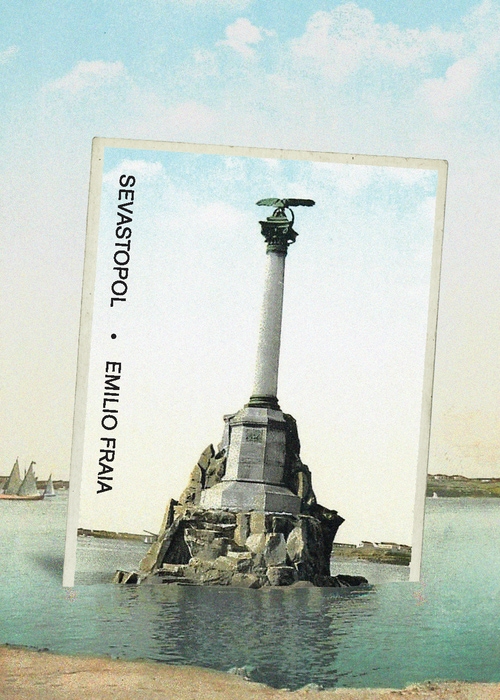
The city of Sevastopol arrives to contemporary Brazil via postcard and comes to life through the play Klaus is writing, which ‘takes place in 1855, in Russia, during the Siege of Sevastopol’. Klaus, who Nadia tells us did political theatre in the 1970s, has written a play about a painter called Bogdan Trunov, who was very much in fashion during the war. That war and the fictional painter are part of the dreamlike backdrop of ‘August.’ But this final story is actually about something more timeless—a fleeting friendship between two eccentrics, one a young woman, the other an ageing man. This is a book about such friendships, about what we might even call literary flames, about those moments of love that have burnt out but not before setting so much ablaze. Emilio Fraia, with his devastatingly gentle prose, has given us a slim and stupendous debut, a novel for all seasons, a book about wounded comrades, about the land, a book about love and war.
.

sexta-feira, 22 de janeiro de 2021

sexta-feira, 8 de janeiro de 2021

sevastopol

.

Em junho, nos Estados Unidos, pela New Directions

Capa do Oliver Munday.
.

terça-feira, 22 de dezembro de 2020

deve ser suficiente

"Quando Baal Schem, fundador do hassidismo, tinha uma tarefa difícil pela frente, ia a certo lugar no bosque, acendia um fogo, fazia uma prece, e o que ele queria se realizava. Quando, uma geração depois, o Maguid de Mesritsch viu-se diante do mesmo problema, foi ao mesmo lugar do bosque e disse: 'Já não sabemos acender o fogo, mas podemos proferir as preces', e tudo aconteceu segundo seus desejos. Passada mais uma geração, o Rabi Moshe Leib de Sassov viu-se na mesma situação, foi ao bosque e disse: 'Já não sabemos acender o fogo, nem sabemos as preces, mas conhecemos o local no bosque, e isso deve ser suficiente'; e, de fato, foi suficiente. 

Mas, passada outra geração, o Rabi Israel de Rijn, precisando enfrentar a mesma dificuldade, ficou em seu palácio, sentado em sua poltrona dourada, e disse: 'Já não sabemos acender o fogo, não somos capazes de declamar as preces, nem conhecemos o local do bosque, mas podemos narrar a história de tudo isso'. E, mais uma vez, isso foi suficiente." 

O fogo e o relato, Giorgio Agamben, 2014
.

segunda-feira, 31 de agosto de 2020

suécia & uk

Sobre o Sebastopol, no site do Brazilian Publishers:

The year of 2020 has been a great year for Emilio Fraia so far. After having the rights of his book Sebastopol sold for an adaptation to the big screen, the Brazilian writer now has his work arriving on the shelves of Swedish bookshops. The title is being released in that country by Tranan, a traditional publisher. The company has already published books by writers like Clarice Lispector, Jorge Luis Borges, and Roberto Bolaño. In Brazil, Sebastopol was published by the imprint Alfaguara, owned by Companhia das Letras, a member of Brazilian Publishers — an industry project fostering the exports of Brazilian editorial content by means of a partnership between the Brazilian Book Chamber and the Brazilian Trade and Investment Promotion Agency (Apex-Brasil). 

The book is also being translated into English, and in 2021 it will be released by American publisher New Directions. Sebastopol is divided into three short stories that work independently but are subtly connected to one another somehow. “The seed of what became one of such stories was sowed back in 2012, in a short story selected and published in Granta magazine”, said the author in an interview to the Brazilian Publishers website. That issue of the British magazine chose the best Brazilian writers under 40 years old, and one of them was Emilio Fraia. 

In the first story, a female climber decides to climb the Everest and suffers an accident that changes her life forever. Years later, she finds a video in which an artist (her ex-boyfriend) seems to be narrating her story. In the second story, set in the Midwest region of Brazil, a man goes to an abandoned inn and then vanishes. The reader slowly discovers the history of that man. In the third and last story, a young woman, together with an old theater director, writes about a Russian painter who has never finished one of his most famous paintings. The artist lived during the Siege of Sevastopol (1854-1855), the main battle during the Crimean War, which involved some Western powerful countries against the Tsarist Russia in the 19th Century. 

Sebastopol was one of the winners of the Brazilian National Library Award (3rd place) and shortlisted for the Jabuti and Oceanos Awards. Last year, one of its three stories was also published in the December issue of The New Yorker magazine. 

Emilio is one of the 30 artists selected for the residency program of the Civitella Ranieri Foundation, located in a castle in the Umbria region, in Italy. The writer was chosen among 165 candidates. 

*

Sebastopol (Sevastopol, 2018), Emilio Fraia’s successful book, is taking over the world. After he has signed contracts to have his work released in Sweden and the United States, where translations are being produced, the Brazilian writer is having the title published in the United Kingdom, too. 

According to Emilio, independent publisher Lolli Editions has shown interest in the story and decided to take it to the UK bookshops. The company had the first contact with his work by means of the anthology “Tools for Extinction”, to which he wrote a short story. “The publisher in charge of the anthology, Denise Rose Hansen, selected writers I admire a lot. It was an honor to me to be part of it. The idea was to try to reflect, in the heat of the moment, on the world of uncertainties, fear and social distancing we began to live in”, explains Fraia. 

Excited about the opportunity, Emilio says Lolli is a publishing house that is “strongly connected with the world of arts”, and although it is an independent company, it has a good space reserved in the bookshops at the Barbican Centre, in London. “Lolli editions are beautiful and I am really thrilled with the release”, adds the author. 

The date for the release of Sebastopol in the UK has not been set yet, but it is expected to be published by 2021. 

Sebastopol includes three short stories that work independently but are subtly connected to one another somehow. In the first story, a female climber decides to climb the Everest and suffers an accident that changes her life forever. Years later, she finds a video in which an artist (her ex-boyfriend) seems to be narrating her story. 

In the second story, set in the Midwest region of Brazil, a man goes to an abandoned inn and then vanishes. The reader slowly discovers the history of that man. In the third and last story, a young woman, together with an old theater director, writes about a Russian painter who has never finished one of his most famous paintings. 

Sebastopol was one of the winners of the Brazilian National Library Award (3rd place) and shortlisted for the Jabuti and Oceanos Awards. Last year, one of its three stories was also published in the December issue of The New Yorker magazine. 

Besides being published abroad, Emilio Fraia was also selected for the Shanghai Writing Program, a literature residency program created in 2008 in China. “I am glad that I’m going to have the chance of writing in a country that has a very unique culture”, he completes.
.

quinta-feira, 9 de julho de 2020

em que montanha azul a nossa meta?

.
"Estuários freqüentes
Desviam nossas velas.
E de que lado, onde
Uma visão mais bela
Se o único prazer
É ter o mar, o vento
E naufrágios além
E descobertas
E permanências veladas...
Muita ausência...
Em que montanha azul a nossa meta?"

Hilda Hilst, "Ode Fragmentária", Exercícios, 2002
.

segunda-feira, 29 de junho de 2020

é difícil falar de si

.
Sobre Natalia Ginzburg e o lançamento de Todos os nossos ontens pela TAG Livros, entrevista para a Fernanda Grabauska.


No prefácio à edição da Companhia das Letras de Léxico familiar, Alejandro Zambra enumera uma série de razões para ler Natalia Ginzburg. Uma delas é que seus relatos são tão inspiradores que, ao terminar o livro, o leitor tem vontade de escrever o seu próprio relato como forma de agradecimento. E você, por que acha que se deve ler Natalia Ginzburg?

Em livros como Todos os nossos ontens e Léxico familiar, Natalia Ginzburg narra pequenas histórias da sua família. E somos surpreendidos, ao fundo, com os acontecimentos sangrentos do seu tempo. A retórica de Ginzburg, no entanto, nunca é enfática, documental, de denúncia. Mas ela consegue de um modo singular e emocionante que a atmosfera íntima seja, de repente, atravessada pela guerra, pela imprevisibilidade, pelo terror. Isso me faz pensar no que estamos vivendo hoje, com o vírus — é mais ou menos como uma guerra, muitos dizem, embora, claro, seja outra coisa — e ler Natalia Ginzburg nestes dias de preocupação, medo e cansaço tem sido uma experiência única. Nos seus romances, o plano mais doméstico — brigas, alegrias, decepções — convive com uma realidade cruel, que revira a vida de todos. Como neste trecho de Léxico familiar: “E não havia mais ninguém que pudesse fingir que nada estava acontecendo, fechar os olhos e tapar os ouvidos, enfiar a cabeça embaixo do travesseiro, não havia.”

Quais foram as principais mudanças da edição de 1986 para a que sai pela TAG? Por que a mudança de título de Todas as nossas lembranças para Todos os nossos ontens?

A Maria Betânia Amoroso voltou à sua tradução dos anos 80, fez uma revisão diligente, encontrou novas soluções de ritmo, sintaxe, vocabulário. A Silvia Massimini, preparadora de texto, e o Fábio Bonillo, tradutor também, que faz parte do departamente de texto da Companhia das Letras, acompanharam o trabalho, fizeram ótimas sugestões. Acredito que tudo tenha ficado mais próximo das intenções da autora. Quanto ao título do romance, o original é Tutti i nostri ieri. A tradução de “ieri” é “ontem”. Achamos importante resgatar esta palavra – e há algo que nunca deveríamos esquecer, como leitores, escritores ou editores: para além do enredo e dos temas, dos personagens e do tom, há sempre as palavras. Embora possa soar um pouco estranho à primeira vista, por conta do plural da palavra “ontem”, é um título mais fiel ao original, mais concreto. A palavra “lembranças” soa como uma abstração, um tanto sentimental, e Ginzburg é uma autora que caminha no sentido oposto, de desdramatizar. Há também uma epígrafe no livro, retirada de Macbeth, que diz: “And all our yesterdays have lighted fools/ The way to dusty death”. Por fim, é preciso notar o aspecto visual e sonoro: a repetição das letras “t”, “i” e “r” do título em italiano encontra uma equivalência bonita nos “t”, “o”, “n” e “s” do nome em português.

O que você pensa dos paralelos normalmente traçados entre Elena Ferrante e Natalia Ginzburg?

Elena Ferrante sem dúvida leu muito bem Natalia Ginzburg. E uma geração de leitores de Ferrante está entrando em contato nos últimos tempos com livros como Léxico familiar, As pequenas virtudes e Todos os nossos ontens, o que é espetacular. A chamada Tetralogia Napolitana, de Ferrante, e os principais textos de Ginzburg têm a atmosfera do pós-guerra italiano, são narrados por mulheres. Mas há muitas diferenças também. O aspecto romanesco dos livros de Elena Ferrante, por exemplo, nós não encontramos na obra de Ginzburg. Poderíamos dizer, num papo de bar, que Ferrante está mais para Balzac, enquanto Ginzburg é Flaubert – de quem ela era grande admiradora e traduziu, aliás, Madame Bovary. Ginzburg trabalha com a elipse, há espaço entre as frases. Ela é mais clara, elegante. Mais moderna. Há na sua prosa um realismo cotidiano nunca óbvio, uma atenção única para o detalhe. E há, além disso, um jogo entre realidade e ficção muito interessante. “Neste livro, lugares, fatos e pessoas são reais. Não inventei nada”, adverte na famosa nota introdutória a Léxico familiar. Mas logo adiante diz: “Embora extraído da realidade, acho que [este livro] deva ser lido como se fosse um romance”. Não é ficção e, no entanto, quer ser lido como ficção, na contramão de obras que buscam a condescendência do leitor ao ancorar suas histórias em “fatos reais”.

Por fim, o que você indicaria para o associado da TAG que deseja conhecer mais da obra de Natalia Ginzburg?

Além dos livros publicados no Brasil pela Companhia das Letras (até aqui, Léxico familiar, As pequenas virtudes e A família Manzoni), eu recomendaria uma entrevista que Ginzburg deu à Radio 3 italiana pouco antes de morrer, em 1991, que foi transcrita no livro È difficile parlare di sé – há uma edição em inglês também, It’s hard to talk about yourself. Recentemente, por conta da redescoberta da sua obra nos Estados Unidos, uma série de críticas e resenhas foram publicadas em veículos como New York Times, New York Review of Books, New Yorker, vale a pena buscar na internet. A Vilma Arêas publicou um texto notável sobre Caro Michele, “Ofício de escrever”, talvez a melhor análise brasileira a respeito da autora italiana. E há três autores, de quem Natalia Ginzburg era fã, que podem iluminar muito o tipo de prosa feito por ela: Flannery O’Connor, Tchekhov e Hemingway. Ela dizia amar os contos de Hemingway, foi sua editora na Einaudi, aliás. Parece ter aprendido com ele muito sobre clareza e simplicidade – sobretudo como, no lugar do mundo interior das ideias e sentimentos, dar forma ao mundo exterior dos lugares e objetos.
.

quinta-feira, 4 de junho de 2020

a um velho poeta no peru

.


"Porque nos conhecemos no entardecer
Debaixo da sombra do relógio da estação
de trens
Enquanto minha sombra estava visitando Lima
E o seu fantasma estava morrendo em Lima
uma cara velha precisando ser barbeada
E minha jovem barba que brotava
magnífica como cabelo morto
nas areias de Chancay
Porque pensei equivocadamente
que você estava melancólico
Cumprimentando seus pés de 60 anos
que cheiravam à morte
das aranhas na calçada
E você cumprimentou meus olhos
com sua voz de anis
Equivocadamente pensando que eu era genial demais
para um jovem
(meu rock and roll é o movimento de um
anjo sobrevoando uma cidade moderna)
(sua obscura confusão é o movimento
de um serafim que perdeu
as asas)
Dei um beijo na sua bochecha gorda (e amanhã de novo
debaixo do estupendo relógio da estação Desamparados)
Antes de ir ao encontro da minha morte num acidente aéreo
na América do Norte (há muito tempo)
E você seguir na direção do seu ataque cardíaco
numa rua indiferente da América do Sul
(Nós dois cercados de
comunistas gritando com flores
enfiadas no rabo)
— você muito antes do que eu —
ou uma longa noite sozinho num quarto
do velho hotel do mundo
observando uma porta negra
...cercado de pedaços de papel."

"A um velho poeta no Peru", Allen Ginsberg, 1960, tradução minha. Ginsberg visitou Lima há exatos 60 anos, em maio de 1960, e escreveu este poema em homenagem ao escritor peruano Martin Adán, autor de La casa de cartón. Ginsberg se hospedou num quarto de hotel em frente à estação de trens, a Estação Desamparados, e conheceu Adán na porta do Bar Cordano, que abriu em 1905 e existe até hoje.
.

quinta-feira, 21 de maio de 2020

uma luz muito forte de repente

.


Então você conta uma história a si mesma. Ela fica ali por umas horas, se fixando. Primeiro, parece que a história poderia ter sido contada de um outro jeito. Mas logo você se surpreende com a ideia de que não, talvez não exista nenhum outro jeito de contar aquilo. Você bem que tentou, você tentou, sim. Alguns dias se passam e agora, para dizer a verdade, você não quer contar a história de nenhum outro jeito que não exatamente aquele. A história encontrou sua forma. Você olha para ela, como se olhasse para um buraco negro, e diz: bem, não vamos mudar nada por aqui. É o tipo de história confusa. Só você sabe o quanto custou. É melhor tocar a vida e cuidar para que o significado não se mova, ou pelo menos não se mova muito. Por um tempo, a história segue sendo repetida, quando vem à cabeça, e é preciso admitir que por conta de tanta coisa que foi acontecendo você não tem pensado nela mais tanto assim. Ela se torna uma montanha. Ela se torna uma onda contra a pedra. Quer dizer, às vezes a história volta com sua luz metálica, o brilho de explosão atômica que tanto te assustou no início. Mas você respira, e tudo está no lugar.


Você toma um copo de leite, come uma banana, dá mais uma volta na chave da porta. A história começa a ficar para trás. Semanas passam. A vida tem o seu ritmo, afinal. Mas um dia você acorda um pouco estranha, é um dia igual a todos os outros, você está tomando café na mesa da cozinha, e é mais uma sensação, como se alguém tivesse tirado uma chapa da sua cabeça. Como se alguém tivesse acendido uma luz muito forte de repente.


Aos poucos você entende que a montanha, aquela montanha, uma velha conhecida, por um segundo ela agora é uma outra coisa. Uma lona cobrindo máquinas e ferramentas na garagem? Você não sabe muito bem. E tudo fica assim, incerto. São dias, semanas. Há um incômodo. Você tenta se organizar. Mas alguma coisa na história, quando você pensa, faz seu coração tremer. É como se por cima dela agora houvesse uma lâmina transparente. A história é a mesma, mas entre você e ela existe alguma outra coisa.

Uma tarde, você deixa o carro num estacionamento e caminha através de uma praça até a rua onde fica a casa da história. Você precisa procurar. Fazia tempo que você não passava por ali. Mudou muito. Quando reconhece enfim a casa, você busca a história e tenta contá-la mais uma vez. Há um prazer um pouco falso nisso, a história se reveste de um ar remoto, deslocado. Na sua superfície agora você distingue manchas. Riscos, um granulado que parece a neve. Mas não é a neve. A história está sendo distorcida pelo calor, pela luz, pelo barulho da rua? Ou é você que está agindo sobre ela. Ecos, uma noite de ano-novo, bicicletas, o mar.


Embora seja exatamente a mesma, a história não se parece muito mais com aquela que você contou um dia a si mesma. A história se combinou também a outras histórias recuperadas pela própria história, e começa a ser difícil separá-las umas das outras, entender onde uma começa e termina a outra. Elas vão se sobrepondo. Isso se torna um problema, ou pelo menos é um problema quando você tenta reordenar aquilo. Você contou a história tantas vezes para si mesma. Não é possível que agora não possa mais. É como se a história escorresse, borrasse… e de repente você pensa, não sem assombro: o que era mesmo aquela história que existiu por tanto tempo? Você não sabe mais o que te levou a contá-la daquele jeito; nada nela te dá segurança. Você coloca a palma da mão sobre a chama de um isqueiro. Você rega a jabuticabeira do quintal. Você faz um barquinho de papel. Você tricota um cachecol, porque o inverno chegou. Na sala, há uma luz mortiça de abajur, uma poltrona, tudo está silencioso. Na cozinha também. Você diz, com raiva, para que todos te ouçam: eu vou dar uma volta! E pega a bolsa, e bate a porta. É tarde, faz frio. No escuro, enquanto caminha, você conta a história para si mesma. Mas a origem e os detalhes se perderam. Há noites no deserto. Há uma noite em que você ajudou um gato a voltar para casa. Há a noite em que você não conseguiu falar e sentiu muito medo. Aquilo tudo fica ali por um tempo, te observando. Você aperta o passo e quando percebe, você está chorando. Mas você não deveria estar chorando. É preciso encontrar um jeito de contar a história. Deve estar aqui em algum lugar.


Conto publicado no blog Entretempos, da Folha de S.Paulo. Fotos do artista japonês Daisuke Yokota.
 .